
2027: WHY NIGERIANS MUST KEEP ATIKU AWAY FROM THE NATIONAL TREASURY
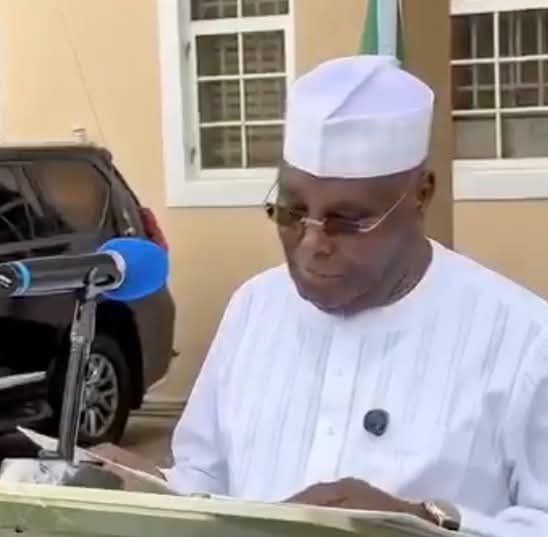
The All Progressives Congress (APC) has issued a press statement calling on the Nigerian electorate to reject former Vice President Atiku Abubakar in the 2027 presidential election. Signing the statement on September 24, 2026, in Abuja, APC National Publicity Secretary Felix Morka asserted that Atiku’s public record in executive office disqualifies him from managing the nation’s treasury. The ruling party characterized Atiku’s tenure during the Obasanjo administration as defined by corruption and cronyism that eroded public trust and severely impacted the national economy.
The APC’s statement referenced several historical and international financial investigations involving the former Vice President, arguing that these matters remain documented in official tribunal records, legislative reports, and government inquiries both in Nigeria and abroad.
Among the primary focal points raised by the party was the recent ruling by the International Chamber of Commerce (ICC) Arbitration Tribunal in Paris regarding the $5.8 billion Mambilla Hydroelectric Power Project. The tribunal proceedings examined a $500,000 payment made on January 30, 2003, by Leno Adesanya, promoter of Sunrise Power and Transmission Company Limited, via an offshore entity known as China Castle Investments, to a US Citibank account belonging to Atiku’s former wife, Jennifer Douglas. The APC noted that this transfer occurred less than four months before the Mambilla contract was awarded under Atiku’s watch as Vice President.
The ruling party highlighted that the ICC tribunal rejected Adesanya’s claims that the transaction was a routine foreign-exchange deal, pointing to the absence of supporting documentation. The party criticized Atiku for declining to appear before the tribunal in Paris to clarify the matter, drawing a sharp contrast with former Presidents Olusegun Obasanjo and Muhammadu Buhari, who both submitted evidence in defense of the Nigerian state.
Beyond the Mambilla project, the APC listed additional international financial inquiries where Atiku or his close associates were featured:
- The Siemens Bribery Scandal: The party recalled allegations by United States authorities that German conglomerate Siemens paid $4.5 million in bribes to secure Nigerian telecommunications contracts during the Obasanjo-Atiku administration. United States investigative records alleged that approximately $2.8 million passed through bank accounts associated with Jennifer Douglas. Siemens ultimately settled the matter with American and German enforcement agencies by paying $1.6 billion in penalties.
- The William Jefferson Case: The statement referenced the corruption conviction of former United States Congressman William Jefferson. US court records noted that Jefferson claimed to have transferred $100,000 to Atiku as part of an attempt to secure regulatory approvals for telecommunications ventures involving iGate and Netlink Digital Television. Jefferson was subsequently convicted and sentenced to prison by a US federal court.
- The 2010 US Senate Investigation: The ruling party brought attention to the findings of the United States Senate Permanent Subcommittee on Investigations. The panel traced over $40 million in offshore funds brought into the United States through more than 30 shell bank accounts associated with Atiku’s former wife, raising questions regarding money laundering and financial compliance.
- The Petroleum Technology Development Fund (PTDF): The statement revisited past executive and legislative investigative panels that examined the management of PTDF funds during Atiku’s tenure as Vice President.
The APC also criticized Atiku’s current economic platform, particularly his stated policy goal to restore petrol subsidies if elected in 2027. The ruling party highlighted this stance as a complete reversal from his 2023 campaign platform, which advocated for subsidy removal. The APC argued that restoring petrol subsidies would jeopardize Nigeria’s foreign exchange reserves, which the party reported had risen under President Bola Tinubu’s economic administration.
To further bolster its position, the APC cited statements from former President Olusegun Obasanjo. The party referenced Obasanjo’s memoir, My Watch, where he described his former deputy as prone to corruption, disloyalty, and sacrificing public good for private interest. The statement also noted Obasanjo’s public comments in August 2026, during which the former head of state expressed regret over choosing Atiku as his running mate in 1999.
The APC concluded its release by urging Nigerian voters to assess candidates strictly on their documented track records of probity and governance ahead of the 2027 presidential contest.
In response to the APC’s press statement, Atiku Abubakar, speaking through his Senior Special Assistant on Public Communication, Phrank Shaibu, rejected the allegations and accused the ruling party of misinterpreting the ICC arbitration award. Atiku challenged the APC leadership to produce specific paragraphs from the ICC tribunal’s judgment showing that he was directly indicted for receiving bribes or manipulating the Mambilla contract.
Atiku stated that he was not a party to the arbitration, did not sit on the technical procurement evaluation panels, and possessed no authority over the final contract award. He added that while the tribunal rejected Adesanya’s explanation regarding the $500,000 transaction, the arbitrators made no finding of criminal liability or corruption against him. Countering the APC’s attacks, the former Vice President accused the ruling party of attempting to divert public scrutiny from current socio-economic challenges, including the high cost of living, inflation, and national security issues ahead of the 2027 polls.
