
Obasanjo Challenges Tinubu Over Fresh Loans, Warns Nigeria’s Debt Could Burden Future Generations
By Edna Joseph
Former President Olusegun Obasanjo has criticised President Bola Ahmed Tinubu’s defence of government borrowing, warning that Nigeria’s increasing debt obligations could create serious economic difficulties for generations yet unborn.
Obasanjo, who played a major role in securing approximately $30 billion in Paris Club debt relief during his administration, argued that excessive borrowing could undermine national development and place long-term financial responsibilities on Nigerians who had no involvement in the decisions.
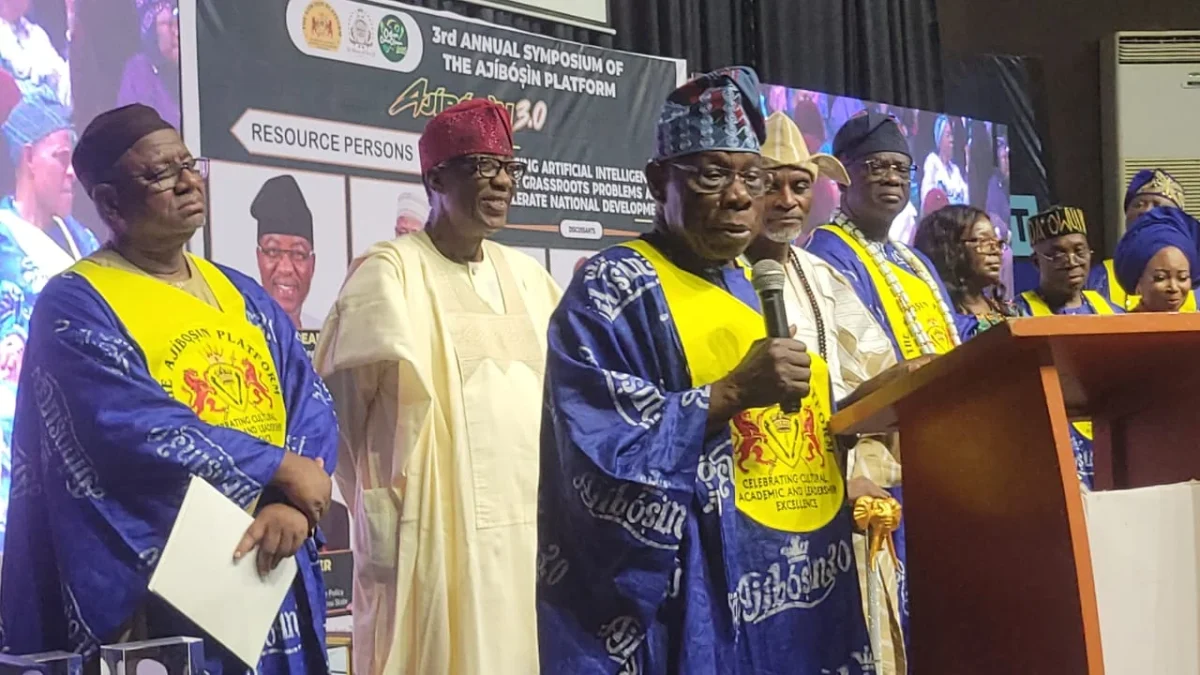
The former president expressed his concerns on Friday, October 30, 2026, during the third Ajibosin Annual Symposium held at the Olusegun Obasanjo Presidential Library in Abeokuta, Ogun State.
The symposium, themed “Leveraging Artificial Intelligence to Solve Grassroots Problems and Accelerate National Development”, brought together stakeholders to discuss Nigeria’s development challenges and the potential of emerging technologies.
Reacting to Tinubu’s earlier statement that borrowing was not leprosy, Obasanjo rejected the comparison and maintained that the consequences of excessive national debt could extend far beyond the present generation.
He described the President’s position as “absolute nonsense”, insisting that the impact of unsustainable borrowing could be more far-reaching than the disease referenced by Tinubu.
His remarks followed the Federal Government’s request for legislative approval of additional external loans amounting to approximately $20.52 billion and €1.045 billion under its supplementary borrowing plan.
The proposed financing is intended to support projects and programmes covering infrastructure, electricity, transportation, healthcare, education, agriculture, security and other development priorities.
Tinubu had earlier defended government borrowing during a meeting with Plateau State leaders in April, arguing that obtaining loans was not necessarily harmful if the country could generate the resources required to repay them.
The President has maintained that strategic borrowing is necessary to address infrastructure deficits, stimulate economic activities and support Nigeria’s long-term development objectives.
However, Obasanjo questioned whether the country’s economic management and development outcomes justified the continued accumulation of debt.
He expressed concern over the depreciation of the naira, recalling that the Nigerian currency was considerably stronger against the United States dollar when he established his farming business decades ago.
The former president also questioned Nigeria’s dependence on international financial institutions, including the World Bank and International Monetary Fund, arguing that their economic recommendations should not automatically determine the country’s development priorities.
According to him, Nigeria must develop policies that reflect its peculiar economic circumstances rather than relying excessively on externally designed financial programmes.
Beyond the controversy surrounding government borrowing, Obasanjo also addressed the growing influence of artificial intelligence and warned against adopting foreign technologies without sufficient understanding of their implications.
He stressed the importance of ensuring that technological innovation serves Nigeria’s national interests, particularly in education, agriculture and grassroots economic development.
The symposium also featured contributions from historian and public policy commentator Dr Umar Ardo, who raised concerns about Africa’s dependence on foreign technological infrastructure and the potential exploitation of the continent’s digital resources.
Ardo advocated stronger African participation in the development, ownership and regulation of artificial intelligence technologies.
Obasanjo’s latest remarks have brought renewed attention to the debate over Nigeria’s borrowing strategy, particularly as the Federal Government seeks additional financing for major development projects.
While the Tinubu administration argues that infrastructure investment can stimulate economic growth and create future opportunities, concerns remain over debt sustainability, repayment obligations and the need to ensure that borrowed funds deliver measurable benefits.
The disagreement highlights a central question in Nigeria’s economic debate: how the country can finance urgent development needs without transferring an excessive financial burden to future generations.
