
Patients Stranded as Specialist Shortage Deepens Crisis in Nigerian Public Hospitals
By Fact Harbour News
Patients across Nigeria are facing prolonged hospital queues, delayed appointments and limited access to specialised medical care as public hospitals struggle with a shortage of specialist doctors.
An investigation by this paper has revealed the difficulties confronting patients seeking treatment at public health facilities, including long waiting periods, restrictions on daily registrations and repeated hospital visits without timely access to consultants.
The investigation found that patients in Ogun, Gombe and Nasarawa states have experienced challenges accessing specialist services, with some reporting that they spent several hours at hospitals without receiving the medical attention they needed.
At the Federal Medical Centre in Idi Aba, Abeokuta, Ogun State, a patient reportedly arrived at the hospital but was unable to register because the daily registration limit had been reached. After returning early the following day, the patient registered but waited until about 3pm before seeing a doctor.
In Gombe State, a caregiver expressed concern over her brother’s eye condition after they encountered difficulties accessing specialist treatment at the Specialist Hospital in Gombe.
Another patient in Lafia, Nasarawa State, said he had spent more than eighty thousand naira over three weeks while trying to obtain a consultation at the ear, nose and throat department.
These experiences reflect the difficulties faced by patients who depend on public hospitals for affordable treatment, particularly those living with conditions that require specialised diagnosis and continuous medical supervision.
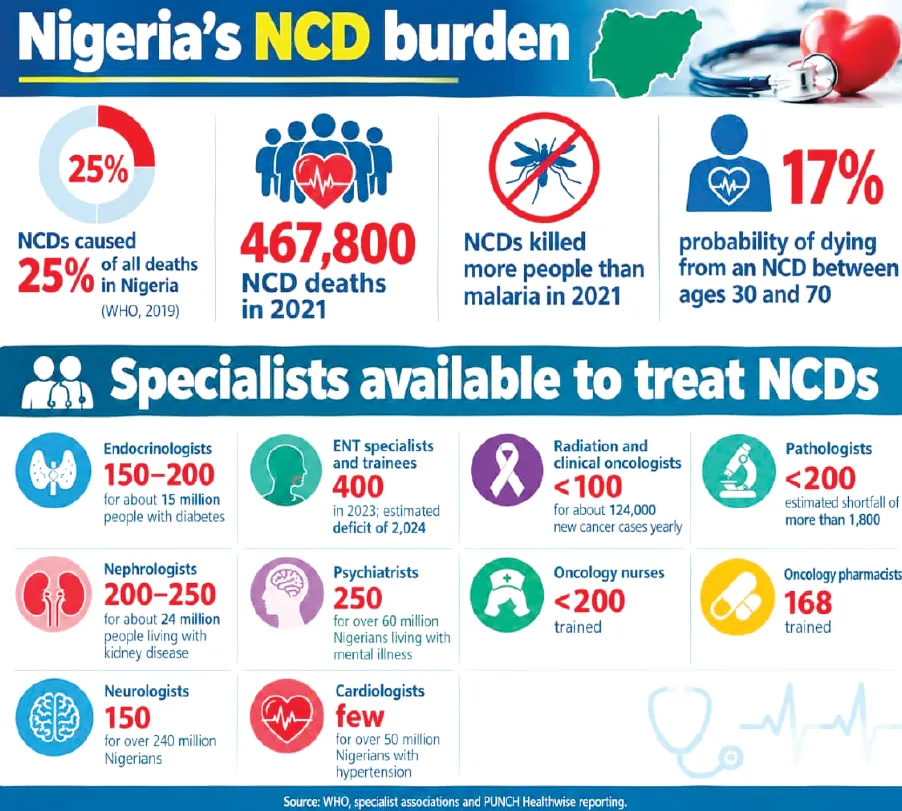
The shortage comes amid a growing burden of non communicable diseases such as diabetes, hypertension, cancer, kidney disease and cardiovascular conditions. These illnesses require qualified specialists, reliable diagnostic equipment and consistent follow up care.
Nigeria has a particularly limited number of specialists in several critical medical fields. Estimates cited in recent reporting indicate that the country has approximately 150 to 200 practising endocrinologists despite an estimated fifteen million people living with diabetes.
The uneven distribution of specialists further complicates access to healthcare. Doctors and advanced medical facilities are concentrated in major urban centres, leaving many rural communities with limited access to specialised services.
Patients from underserved areas are often forced to travel long distances to teaching hospitals and federal medical centres. Such journeys increase transportation costs and other expenses, placing additional pressure on families already struggling to pay for treatment.
Healthcare professionals have also raised concerns about heavy workloads, inadequate facilities, poor working conditions and the migration of experienced doctors to countries offering better professional opportunities.
As the number of available specialists declines or fails to keep pace with demand, the doctors who remain must attend to growing numbers of patients while managing other clinical responsibilities. This situation can increase pressure on healthcare workers and contribute to burnout.
The shortage is not solely a question of the number of doctors available. Effective specialist care also depends on functional laboratories, diagnostic equipment, reliable electricity, adequate medicines, sufficient hospital beds and trained support staff.
Health sector stakeholders have continued to call for improved working conditions, expanded specialist training, better remuneration and a more balanced distribution of healthcare professionals across the country.
Strengthening general hospitals and primary healthcare facilities could also reduce pressure on specialist centres by allowing suitable conditions to be diagnosed and treated closer to patients’ homes.
Improved health insurance coverage and more efficient referral systems would help reduce the financial burden on patients and ensure that people with serious conditions receive appropriate attention without unnecessary delays.
The findings of this paper’s investigation highlight the need for sustained investment in Nigeria’s healthcare workforce and public hospital infrastructure. Without practical measures to address specialist shortages and improve service delivery, many patients may continue to face delays in obtaining the treatment they urgently need.
