
US Ends Military Mission in Iraq After More Than Two Decades

By Fact Harbour News
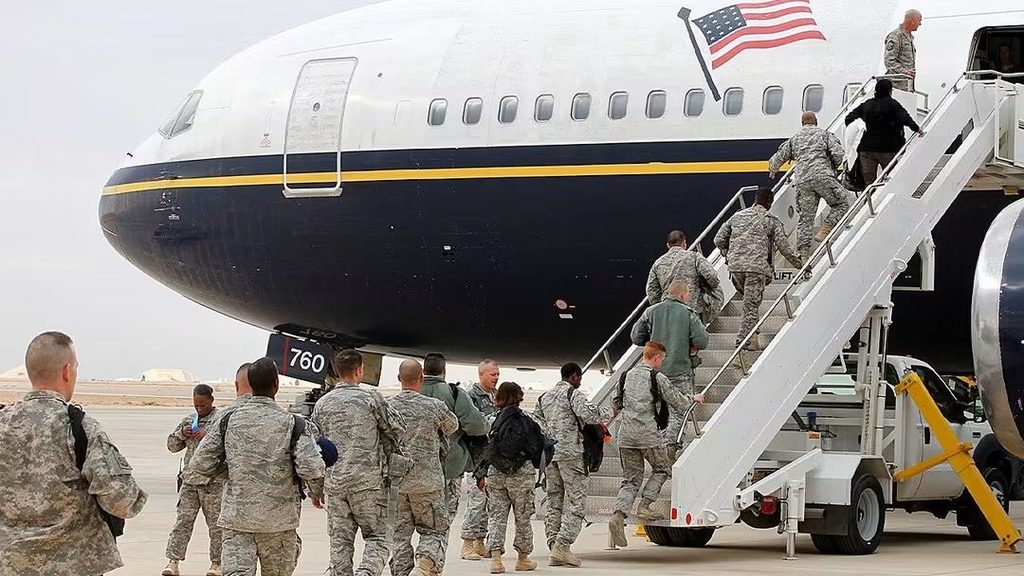
The United States has formally ended its military mission in Iraq, marking a major transition in its involvement in the country more than two decades after American forces entered Baghdad during the 2003 invasion.
The latest phase of the U.S. presence was largely shaped by the fight against Islamic State, commonly known as ISIS, after the militant group captured extensive areas of Iraq and Syria in 2014.
At the height of the campaign against ISIS, the United States and its international partners provided military assistance, intelligence, training and air support to Iraqi forces seeking to recover territory held by the group.
In the final years of the mission, about 2,500 U.S. troops remained in Iraq, operating primarily in support and advisory roles.
The withdrawal follows an agreement between Washington and Baghdad to conclude the coalition’s military mission in Iraq and move the relationship towards a more conventional bilateral security partnership.
Although the formal U.S.-led coalition operation in Iraq has ended, Washington’s wider counterterrorism involvement in the region has not completely disappeared. The United States continues to operate with regional partners from neighbouring countries, including Jordan, while maintaining activities connected to efforts against ISIS in Syria.
The departure comes at a sensitive point for Iraq’s domestic security situation.
One of the major issues facing Baghdad is the presence of armed groups that operate with varying degrees of independence from the central government. Several powerful factions have close relationships with Iran and have opposed the continued presence of American forces in Iraq.
Those groups have previously carried out attacks against U.S. personnel and facilities, particularly during periods of heightened tension between Washington and Tehran.
The Iraqi government’s efforts to bring weapons under state control have also become an important part of the country’s security debate.
Baghdad has been working towards a framework for limiting the activities of armed factions outside the authority of the state. The timetable for achieving that objective has, however, faced resistance and has been extended.
The U.S. withdrawal has consequently generated different reactions among Iraqi political and security actors.
For the Iraqi government, the departure represents an important step towards assuming greater responsibility for national security and reducing the country’s dependence on foreign military forces.
Some armed factions that had opposed the American presence have also welcomed the withdrawal.
The situation is more complicated in northern Iraq, particularly in the Kurdistan Region, where Kurdish authorities have relied on American military support and cooperation during the campaign against ISIS.
Security officials have raised concerns about whether the withdrawal could affect intelligence-sharing, surveillance and other capabilities that have supported Iraqi and Kurdish forces.
Another issue is the continuing threat posed by ISIS.
Although the group no longer controls the extensive territory it once held in Iraq, its networks have not completely disappeared. The organisation has continued to operate through smaller cells capable of carrying out attacks and exploiting security weaknesses.
Iraqi and Kurdish security authorities have therefore remained concerned about maintaining sufficient intelligence and operational capabilities after the departure of American forces.
The end of the U.S. military mission also represents a significant change from the early years of America’s involvement in Iraq.
The 2003 invasion led to the overthrow of former Iraqi President Saddam Hussein and was followed by years of insurgency, sectarian violence and political instability. American forces eventually left Iraq in 2011 before returning three years later as part of the international campaign against ISIS.
The latest withdrawal is therefore not simply the conclusion of the 2014 anti-ISIS deployment. It marks the end of a long period in which U.S. troops have been directly involved in Iraq’s security affairs.
American officials have indicated that the change does not mean Washington is abandoning its relationship with Baghdad.
Instead, the two countries are expected to continue security cooperation under a bilateral framework, with Iraqi forces taking greater responsibility for domestic security operations.
The transition also places greater pressure on Iraq’s security institutions to maintain the gains achieved during the campaign against ISIS while managing competing armed groups and regional tensions.
For Washington, the new arrangement reduces the need for a large permanent military presence in Iraq while allowing continued cooperation with Iraqi authorities and regional partners.
For Iraq, the next phase will test the ability of its security institutions to operate independently while preventing militant groups from exploiting political or security gaps.
The conclusion of the U.S. military mission therefore closes one of the longest chapters of American military involvement in the Middle East, but it does not end the security challenges facing Iraq.
The country now enters a new phase in which its government will have greater responsibility for maintaining internal security, combating remaining extremist networks and managing the activities of armed factions within its borders.
