
Nigeria Considers Gradual Withdrawal of Soldiers from Internal Security Duties, Says Defence Minister
By Bassey Bassey
The Federal Government is considering a gradual withdrawal of military personnel from routine internal security operations across Nigeria, as part of efforts to strengthen civilian security agencies and allow the Armed Forces to concentrate on their primary defence responsibilities.
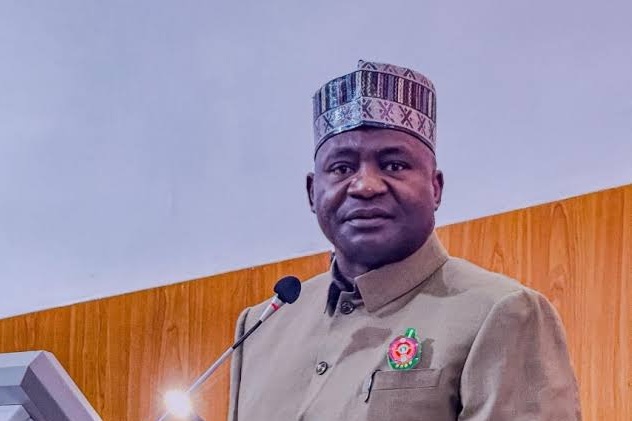
The Minister of Defence, General Christopher Musa (retd.), said the country’s security challenges require a coordinated approach involving the military, police, intelligence agencies and other relevant institutions.
The proposal comes amid growing concerns over the prolonged deployment of soldiers to address terrorism, banditry, kidnapping and other criminal activities across different parts of the country.
Military personnel have been deployed in several states under various security operations, often working alongside the police and other agencies to contain threats and restore stability in affected communities.
The increasing reliance on the military for domestic security has also generated discussions about the capacity of civilian security institutions to take greater responsibility for maintaining law and order.
Former Chief of Army Staff, Lieutenant General Tukur Buratai (retd.), had previously warned that the extensive deployment of soldiers for internal security duties could weaken the operational capacity of the police and other civilian agencies.
Buratai argued that while military intervention could provide immediate security support, prolonged deployment risked overstretching the Armed Forces and diverting resources from their core responsibilities.
He called for a clear, time-bound and conditions-based withdrawal strategy that would gradually return internal security responsibilities to civilian authorities.
Similarly, Chief of Defence Staff, General Olufemi Oluyede, has emphasised the need to strengthen the Nigeria Police Force and the Nigeria Security and Civil Defence Corps to ensure that they can effectively sustain security operations in communities cleared of criminal elements.
The proposed transition is expected to depend on the operational readiness of civilian security agencies, particularly in areas currently experiencing persistent attacks and criminal activities.
The Defence Ministry has also maintained that addressing insecurity requires more than military operations. Minister Christopher Musa has repeatedly called for stronger intelligence gathering, technological innovation, community participation and improved defence capabilities.
Speaking at a security management event in Ibadan on October 30, 2026, Musa stressed that Nigeria’s security challenges were complex and could not be resolved through military force alone.
He identified weak governance systems, extremism and social exclusion among factors contributing to insecurity, while advocating stronger cooperation between security institutions, academic researchers and other stakeholders.
The minister’s position suggests that any reduction in military involvement in internal security would need to be accompanied by improvements in policing, intelligence gathering, equipment, personnel training and emergency response.
For communities affected by insurgency, banditry and kidnapping, the transition would also require adequate security arrangements to prevent criminal groups from returning to areas previously secured by military operations.
The Federal Government’s consideration of a gradual withdrawal therefore raises important questions about the future responsibilities of the police, civil defence personnel and intelligence agencies in protecting lives and property.
Although the proposal does not amount to an immediate withdrawal of soldiers from troubled areas, it reflects growing attention to the need for a sustainable security structure in which civilian agencies play a stronger role while the military concentrates on its constitutional defence mandate.
