
Tinubu Says Nigeria Has Waived ₦3.3 Trillion in Fuel Taxes and Duties to Ease Hardship
By Fact Harbour News
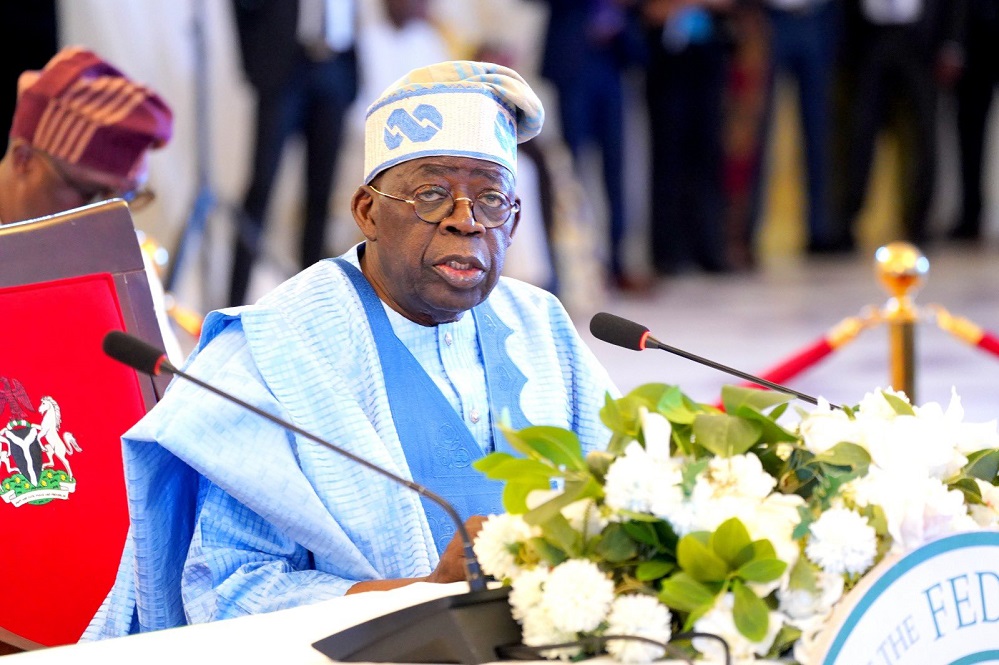
President Bola Ahmed Tinubu has said the Federal Government waived more than ₦3.3 trillion in fuel taxes and duties between January and September 2026 as part of measures to cushion Nigerians against rising petrol prices and the high cost of living.
Tinubu disclosed this while defending his administration’s economic policies and outlining interventions aimed at reducing transportation costs for households and businesses.
According to reports published on October 12, 2026, the President said the tax and duty waivers were intended to moderate the impact of rising fuel prices while the government expanded alternative transportation options, including compressed natural gas (CNG)-powered buses and electric vehicles.
The President also announced that Nigerian National Petroleum Company (NNPC) Retail would forgo its profit margin for 30 days, with public transport operators receiving priority under the temporary relief arrangement.
The government is also working towards a proposed ceiling of ₦1,350 per litre on wholesale petrol supply costs, an initiative intended to reduce price volatility and ease pressure on consumers.
The Minister of Finance and Coordinating Minister of the Economy, Taiwo Oyedele, previously explained that the government’s approach relied on targeted relief measures rather than restoring a blanket petrol subsidy.
He said the fuel tax and duty waivers were valued at more than ₦3.3 trillion up to September 30, 2026.
The administration has maintained that its approach is designed to provide relief without reversing the petrol subsidy reform introduced in May 2023. However, the effectiveness of the measures will depend partly on how much of the savings are reflected in pump prices, transport fares and the cost of goods and services.
Tinubu also highlighted the role of CNG-powered buses and electric vehicles in reducing commuting expenses in some parts of the country.
He cited examples of passengers experiencing lower fares on selected routes following the introduction of alternative-fuel transport services.
The President said more than 120,000 vehicles had been converted to run on CNG, while over 400 certified conversion centres and more than 90 CNG refuelling stations were available nationwide.
The administration has continued to promote CNG as an alternative to petrol, arguing that wider adoption could lower transport operating costs and reduce exposure to fluctuations in petrol prices.
Nevertheless, access to conversion facilities, refuelling infrastructure and affordable alternative-fuel vehicles remains important to determining how widely Nigerians can benefit from the initiative.
While defending the reforms, Tinubu acknowledged that the benefits had not yet translated sufficiently into improved living conditions for many Nigerians.
He reiterated his administration’s commitment to reducing food prices, creating jobs and expanding access to essential services.
The rising cost of petrol has implications beyond transportation, affecting logistics, food distribution, manufacturing and small businesses that depend on fuel-powered generators and vehicles.
For many households, the central question remains whether government interventions will lead to sustained reductions in transport fares and the prices of basic goods.
The ₦3.3 trillion waiver announcement therefore places renewed attention on how the Federal Government’s fiscal measures translate into tangible relief for consumers.
The administration has maintained that its economic reforms are intended to improve public finances and create room for development spending. The challenge ahead will be ensuring that these broader objectives are accompanied by measurable improvements in household purchasing power.
