
Iranian Rial Crashes to Record Low as $1 Surpasses 2.7 Million Rials

By Fact Harbour News
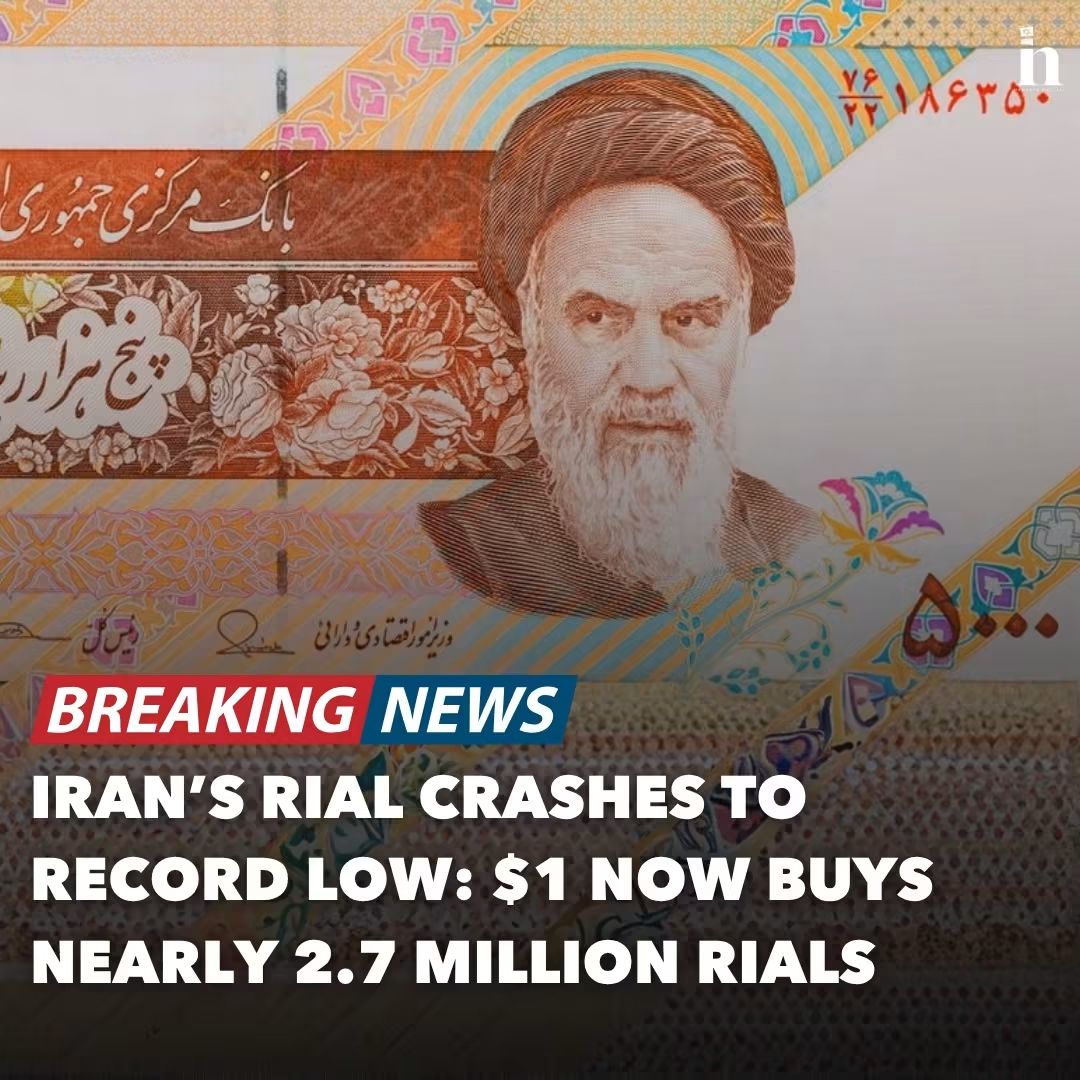
Iran’s national currency, the rial, has fallen to another record low against the US dollar, with the exchange rate moving beyond 2.7 million rials for $1 on the country’s open market.
The latest decline has intensified concerns over Iran’s worsening economic conditions as the government faces mounting pressure from sanctions, restrictions on oil revenues, inflation and the broader economic consequences of the ongoing conflict.
Reports on Sunday, October 4, indicated that the dollar was trading at approximately 2.723 million rials on the open market, representing another decline in the value of the Iranian currency. The rial had already fallen to around 2.688 million per dollar on Saturday, compared with approximately 2.632 million the previous day.
The rapid depreciation has prompted Iranian authorities to intervene in the foreign-exchange market. State banks have been instructed to sell dollars, with reports indicating that up to $2 billion could be made available as part of efforts to slow the rial’s decline and stabilize the market.
The latest intervention demonstrates the seriousness of the pressure facing Iran’s currency. The rial has reportedly lost more than half of its value against the dollar over the past year, while Iran is also dealing with inflation above 70 percent, according to recent reports.
The currency crisis is particularly significant because a weaker rial makes imported goods substantially more expensive. Businesses that depend on imported raw materials and consumers who purchase foreign-made products face higher costs when the domestic currency loses value.
Many Iranians have also reportedly sought to protect their savings by moving money into US dollars, other foreign currencies and gold. Such behaviour can put additional pressure on a national currency because increased demand for foreign currencies can accelerate exchange-rate depreciation.
The economic pressure has also become part of the wider confrontation between Tehran and Washington. The United States has maintained extensive sanctions against Iran, while recent measures have targeted the country’s oil exports and financial channels. The restrictions have complicated Iran’s ability to generate and access foreign-exchange earnings.
Iranian officials, however, have rejected suggestions that the latest currency decline means the country’s economy is on the verge of collapse. Mehdi Darabi, an adviser to the central bank governor on foreign-exchange affairs, attributed part of the recent decline to negative expectations and statements about an impending economic collapse, arguing that the latest depreciation would be temporary.
The Iranian government has therefore presented the currency intervention as an effort to calm the market and prevent further instability. The effectiveness of the move will depend partly on whether authorities can maintain sufficient foreign-currency supply while controlling inflation and restoring confidence in the rial.
The speed of the rial’s decline nevertheless highlights the scale of Iran’s economic difficulties. Earlier in the year, the currency had already crossed the two-million-rial-per-dollar threshold, and it subsequently moved through 2.5 million and then 2.6 million before reaching the latest levels above 2.7 million.
While sanctions are clearly one of the factors contributing to Iran’s economic pressure, the currency collapse cannot be attributed to sanctions alone. Inflation, reduced access to foreign exchange, restrictions on oil revenues, market expectations and the economic effects of the conflict are also contributing to the deterioration.
For ordinary Iranians, however, the consequence is immediate: a rapidly weakening currency means rising prices and declining purchasing power. The government’s decision to make billions of dollars available to the market shows that authorities are attempting to contain the crisis, but the continued fall of the rial suggests that restoring confidence in the currency will remain a major challenge.
