NBA Confab: Presidential Candidates Clash Over Security, Fuel Subsidy and Economic Reforms
Reported By Facthabournews
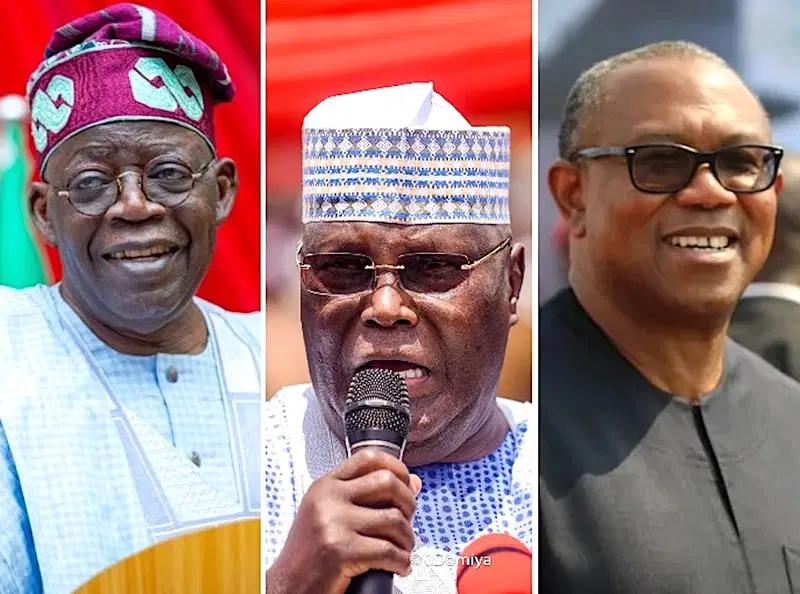
Presidential candidates and political leaders have engaged in heated exchanges over Nigeria’s security challenges, policing, fuel subsidy and economic management at the 66th Annual General Conference of the Nigerian Bar Association (NBA) in Port Harcourt, Rivers State.
The political session, held on Monday, brought together several prominent figures ahead of the 2027 general election, with candidates presenting different approaches to some of the country’s most pressing challenges.
The discussions centred particularly on the future of Nigeria’s policing system, the removal of petrol subsidy, economic productivity, poverty reduction and the performance of successive administrations.
Sowore, Amaechi Clash Over Government Policies
One of the most notable exchanges involved African Action Congress presidential candidate Omoyele Sowore and former Rivers State Governor Rotimi Amaechi, who represented former Vice-President Atiku Abubakar at the conference.
Amaechi argued that Nigeria’s economic challenges could be addressed by creating jobs, encouraging local production and ensuring that money circulates within the economy.
He also highlighted infrastructure and security initiatives he said were undertaken during his tenure as Rivers State governor.
On policing, Amaechi expressed support for community policing rather than relying exclusively on a state-controlled police structure. He argued that community-based policing could improve intelligence gathering because local personnel would be more familiar with the communities they serve.
Sowore, however, maintained that fundamental changes in national leadership were necessary to address insecurity and other problems confronting the country.
Candidates Differ Over State Police
Policing was one of the major issues discussed during the session.
Several candidates expressed support for the establishment of State Police as part of efforts to improve security and make law enforcement more responsive to local communities.
However, Social Democratic Party presidential candidate Adewale Adebayo proposed a three-tier policing structure involving the Federal Government, states and local governments.
The debate reflects Nigeria’s longstanding discussion about whether the existing centralised police structure is adequate for a country of its size and population.
Supporters of decentralisation argue that state or community-based policing could improve intelligence gathering and response times, while critics have raised concerns about political interference and accountability.
Gbajabiamila Defends State Police Reform
Chief of Staff to President Bola Tinubu, Femi Gbajabiamila, defended the Federal Government’s proposed policing reforms during a keynote address titled “Policing in Transition.”
Gbajabiamila said the Tinubu administration was addressing what he described as longstanding weaknesses in Nigeria’s security architecture.
He argued that the move towards State Police was intended to improve police coverage while introducing safeguards against potential abuse.
According to him, Nigeria currently has approximately one police officer for every 650 people, compared with an international benchmark of about one officer for every 450 people. He also noted that many police personnel are assigned to administrative and escort duties rather than core policing responsibilities.
Gbajabiamila stressed that the proposed reform would require better training, professionalism and institutional safeguards.
He also raised the question of who should police the police, arguing that elected governors should have appropriate executive responsibilities without being allowed to use police powers against political opponents.
Fuel Subsidy Sparks Another Debate
The controversial removal of petrol subsidy also featured prominently during the conference.
Sowore criticised the subsidy system and argued that the debate should focus on who ultimately benefits from government intervention in the petroleum sector.
He questioned the impact of subsidy removal on ordinary Nigerians and argued that transportation policy should form part of any broader discussion about fuel pricing.
The comments reflect the continuing political debate over the decision by the Tinubu administration to remove petrol subsidy in 2023.
While the government has defended the policy as necessary for improving public finances and redirecting resources, critics have pointed to the effect of higher energy and transportation costs on households and businesses.
Peter Obi Emphasises Production
Nigerian Democratic Congress presidential candidate Peter Obi approached the economic discussion from the perspective of poverty reduction and increased domestic production.
Obi argued that Nigeria needed to move away from a consumption-driven economy and invest more heavily in agriculture and productive activities.
His position placed food production, employment and economic opportunities at the centre of the discussion about insecurity.
The argument is that greater economic opportunities could help address some of the social and economic conditions that contribute to insecurity.
Donald Duke Calls for Better Leadership
Former Cross River State Governor Donald Duke also participated in the discussions.
Duke argued that leadership remained central to addressing many of Nigeria’s problems.
He also criticised the influence of ethnicity in Nigerian politics and called for a collective effort to improve the country’s presidential system.
His position was that effective leadership could help create the conditions required to tackle the country’s economic, security and governance challenges.
2027 Campaign Issues Take Centre Stage
The debate at the NBA conference comes as political parties and presidential candidates increasingly position themselves for the 2027 election.
The candidates’ different positions highlight the policy choices likely to dominate the coming campaign, particularly security, policing, fuel pricing, economic growth and poverty reduction.
The discussion also demonstrates that opposition figures are not necessarily united on how Nigeria’s challenges should be addressed.
While there was broad agreement that the country requires improvements to its security architecture, candidates differed over whether State Police, community policing or a broader multi-level system would provide the most effective solution.
The economic debate similarly exposed differences over the direction of government policy, particularly the consequences of fuel subsidy removal and the need to increase domestic production.
For voters, such debates provide an opportunity to compare the policies and priorities being presented by different political actors ahead of the next presidential election.
As the 2027 campaign gathers momentum, issues raised at the NBA conference are likely to remain central to political discussions across the country.
The challenge for the various candidates will be to move beyond criticism of existing policies and present practical, measurable proposals capable of addressing Nigeria’s security, economic and governance problems.
This report is based on statements and positions attributed to participants at the 66th Annual General Conference of the Nigerian Bar Association. Political claims and policy positions expressed by candidates are presented as their views and are not independently verified facts.
