
Woman Born Without Fingerprints Recounts JAMB, NYSC Biometric Struggles
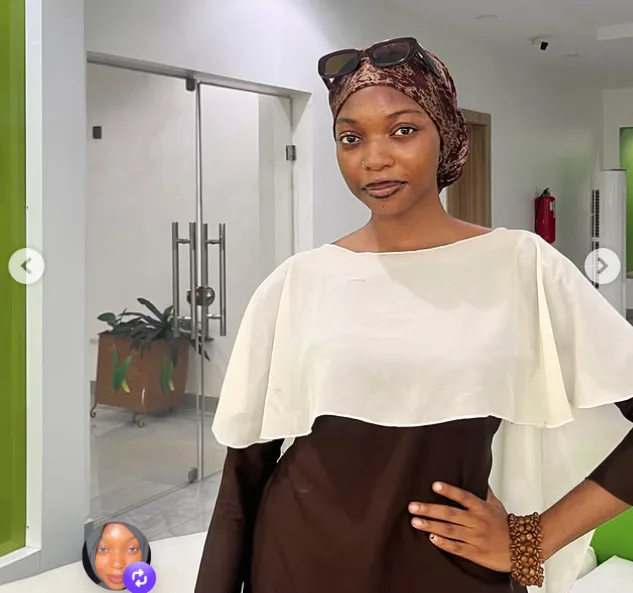
A Nigerian woman born without conventional fingerprints has shared her experience of navigating biometric identification systems, revealing the difficulties she encountered during Joint Admissions and Matriculation Board (JAMB) registration, the National Youth Service Corps (NYSC) programme and banking transactions.
The woman, who identifies herself on Instagram as J for Jidds, said her condition became particularly challenging in 2017 when she attempted to register for her first JAMB examination. Her story has since attracted attention online, with other Nigerians also sharing similar experiences.
JAMB Registration Became a Major Challenge
According to Jidds, she attended the JAMB registration centre with her father but officials were unable to successfully capture her fingerprints.
She said she spent most of the day at the centre while other candidates completed their registration.
In an account shared on social media, she recalled watching more than 200 people register ahead of her while officials tried different approaches to make the biometric equipment recognise her fingerprints.
She said different substances and methods were reportedly suggested in an attempt to improve the fingerprint capture, including sand, spirit, methylated spirit, chalk and watermelon.
The experience was emotionally difficult for her, particularly because she did not initially understand why the biometric system could not recognise her.
The problem did not end after registration. She said she also experienced difficulties with biometric authentication when she eventually went to write the examination.
NYSC Presented Another Biometric Problem
The challenge resurfaced during her NYSC programme.
Because the biometric systems relied on fingerprints to verify participants, she said she sometimes had difficulty completing the required authentication.
She explained that she eventually had to use part of her foot on some occasions because the ridges on her fingers were absent and those on her toes were also faint.
Her experience highlights a challenge faced by people whose biological characteristics do not conform to the assumptions built into conventional biometric systems.
Fingerprint identification works by analysing the unique ridge patterns on a person’s fingers. For someone without those patterns, ordinary fingerprint scanners may not be able to produce a usable biometric record.
Banking Transactions Also Affected
Jidds said her difficulties have extended beyond education and NYSC.
She also experiences challenges when dealing with banks and other institutions that require fingerprint verification.
According to her, routine activities that most people complete without difficulty can become stressful when a biometric scanner fails to recognise her.
She described living without fingerprints in Nigeria as frustrating because of the widespread use of biometric identification.
Her experience has also raised questions about how institutions can provide alternative verification procedures for people who cannot use fingerprint-based systems.
What Is Adermatoglyphia?
The condition associated with the absence of fingerprints is known as adermatoglyphia.
Medical information describes adermatoglyphia as a rare condition involving the absence or significant reduction of the ridge patterns normally found on the fingers, toes, palms and soles.
Because fingerprint scanners depend on these ridge patterns, people with the condition can encounter difficulties when accessing services that rely exclusively on fingerprint authentication.
The condition is rare, and many people may be unfamiliar with it.
Jidds said her experience has sometimes been made more difficult by misconceptions from people who do not understand why she has no fingerprints.
She recalled that some people had made inappropriate comments and associated the absence of fingerprints with superstition or criminal activity.
Other Nigerians Share Similar Experiences
Following her social media post, other Nigerians reportedly contacted her to share their own experiences with biometric systems.
Some said they had encountered problems at embassies, during NYSC activities and while accessing banking services.
The responses suggested that the challenge may affect more people than is generally recognised.
For those individuals, the issue is not an inability to comply with biometric requirements but the fact that the technology may not be capable of capturing their biological identifiers.
Dermatologist Advises Medical Documentation
Dermatologist Dr Folakemi Cole-Adeife responded to the discussion by advising people who believe they have the condition to seek professional medical assessment.
She said individuals diagnosed with adermatoglyphia could obtain medical documentation to support requests for exemption from fingerprint-based biometric procedures.
Such documentation could help institutions such as JAMB and other government agencies understand that the applicant’s inability to provide a fingerprint is a medical circumstance rather than an attempt to evade identification requirements.
The approach could also help reduce repeated explanations and delays for affected individuals.
Calls for More Inclusive Biometrics
The experience has renewed discussions about the need for alternative biometric verification systems.
Fingerprint identification remains widely used because fingerprints are generally considered unique and relatively convenient to capture. However, systems that rely exclusively on fingerprints can create difficulties for people with conditions that affect fingerprint patterns.
Alternative identification methods could include facial recognition, iris recognition, official medical documentation, manual verification or other secure authentication procedures, depending on the requirements of the institution.
The objective would not necessarily be to eliminate fingerprint biometrics but to ensure that people who genuinely cannot provide usable fingerprints have a recognised alternative.
A Wider Technology and Inclusion Issue
Jidds’ experience illustrates an important challenge in the growing use of biometric technology.
As governments, financial institutions, schools and other organisations increasingly rely on digital identity systems, accessibility and inclusion are becoming important considerations.
Biometric systems are designed around biological characteristics, but human beings do not always fit standard biometric profiles.
Institutions therefore need procedures for handling exceptional cases without compromising security or unnecessarily subjecting affected individuals to repeated delays and embarrassment.
For Jidds, the issue is ultimately about recognition and understanding.
Her experience shows how a condition that may be unfamiliar to many people can have practical consequences when everyday services increasingly depend on biometric authentication.
Her story has also encouraged other Nigerians with similar experiences to speak publicly about their challenges.
As biometric technology becomes more widespread, the experience of people born without conventional fingerprints could serve as a reminder that identification systems must be designed to accommodate legitimate exceptions while maintaining reliable and secure verification.
This report is based on the woman’s publicly shared account and reports from Nigerian media. Medical conditions and individual experiences should be confirmed by qualified healthcare professionals and the relevant institutions.
