
Dangote Refinery Resumes Naira Sales of Petrol at ₦1,215 Per Litre
Reported by Fact Harbour News
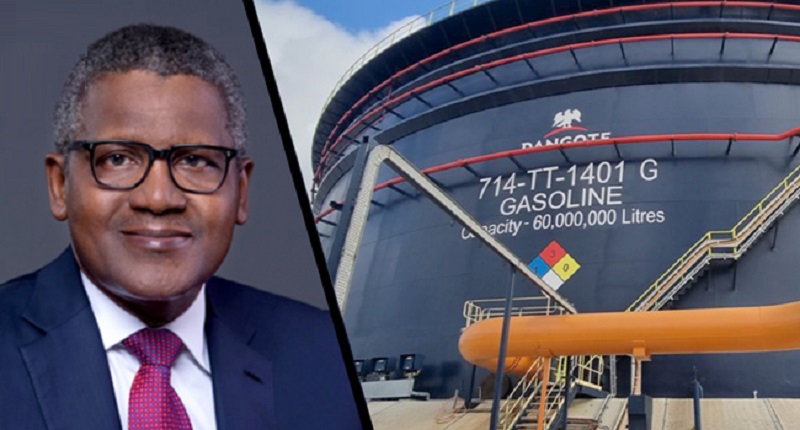
LAGOS – Dangote Petroleum Refinery has resumed the sale of Premium Motor Spirit (PMS), popularly known as petrol, in naira, fixing its gantry price at ₦1,215 per litre, a move widely welcomed by petroleum marketers and industry stakeholders.
The decision comes barely two weeks after the refinery adopted a dollar-based pricing system for its petroleum products, citing prevailing market conditions. Under the previous arrangement, petrol was sold at $0.779 per litre, while diesel and aviation fuel were priced at $1.087 and $0.942 per litre, respectively.
The return to naira transactions is expected to provide relief to marketers by reducing their dependence on foreign exchange for product purchases, particularly at a time when global crude oil prices have continued to rise. Brent crude was trading at about $95 per barrel on Wednesday, reflecting heightened geopolitical tensions in the Middle East.
The National President of the Independent Petroleum Marketers Association of Nigeria (IPMAN), Abubakar Maigandi, described the refinery’s decision as a positive development for marketers and consumers across the country.
According to him, IPMAN had previously expressed concerns over the challenges associated with dollar-denominated sales, adding that the reversal demonstrates that the refinery listened to stakeholders’ concerns.
“We complained about the sale of products in dollars, and we are pleased that Dangote Refinery has returned to naira sales. It is a welcome development for marketers and for Nigerians,” Maigandi said.
He assured Nigerians that marketers would reflect the new pricing at filling stations once they begin lifting products at the revised ex-depot rate.
“We do not take pleasure in high fuel prices or the hardship faced by Nigerians. As soon as we start loading petrol at the new price from the refinery, we will adjust pump prices accordingly,” he added.
Industry analysts have also welcomed the policy shift, noting that its greatest impact may be on Nigeria’s foreign exchange market.
Chief Executive Officer of the Centre for the Promotion of Private Enterprise (CPPE), Dr. Muda Yusuf, said selling petroleum products in naira would significantly reduce pressure on the country’s foreign exchange reserves.
According to him, while the decision is beneficial for the economy, Nigerians should not automatically expect a substantial reduction in retail petrol prices because domestic fuel pricing remains closely tied to developments in the international crude oil market.
“The most significant benefit of this decision is the relief it provides to the foreign exchange market,” Yusuf said.
“However, international crude oil prices have been rising steadily due to geopolitical tensions in the Middle East. Therefore, the return to naira sales does not necessarily translate into an immediate reduction in pump prices.”
The development comes as the Dangote Refinery continues to play a pivotal role in Nigeria’s downstream petroleum sector following the commencement of commercial fuel production. Industry observers believe the refinery’s pricing decisions will continue to influence competition, fuel availability and pricing dynamics across the country.
Stakeholders are expected to closely monitor how quickly marketers adjust retail pump prices and whether the renewed naira sales policy will improve fuel affordability for consumers in the coming days.
